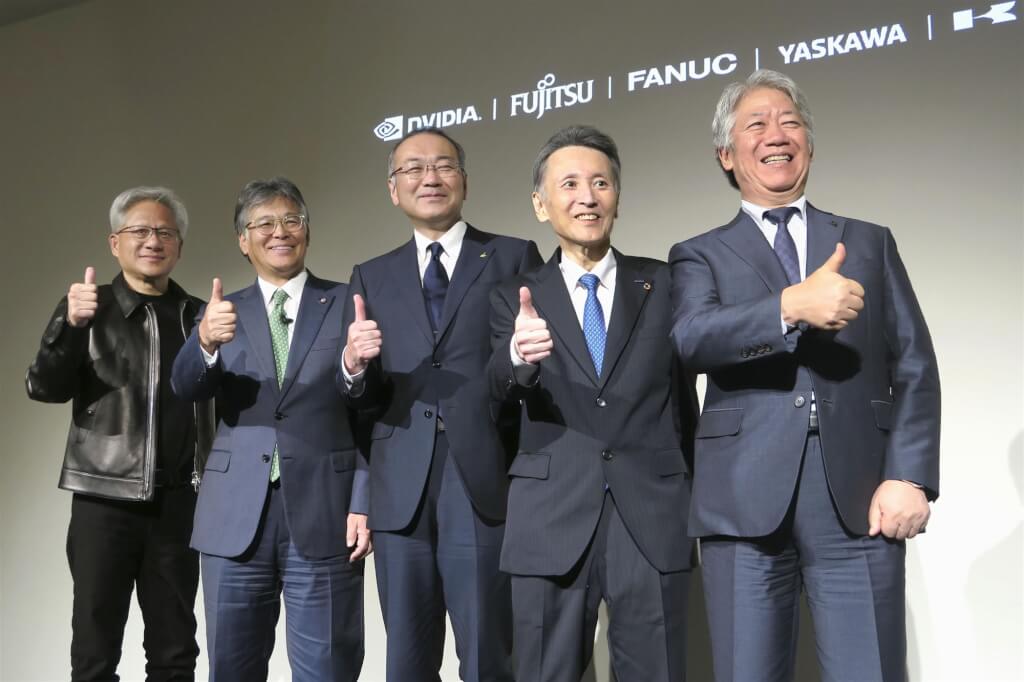
Recently, Japanese companies across various industries have formed cross-sector alliances to jointly develop technologies centered on “Embodied AI.” The Japanese government views Embodied AI as the key to leveraging the nation’s manufacturing strengths to gain a competitive edge, and is therefore actively promoting its development.
According to a report by Jiji Press, “Embodied AI” refers to technology that enables robots and vehicles to operate autonomously through AI; essential to this development is data gathered from actual operational environments (“field data”).
Five companies—including the Kampo (traditional Japanese herbal medicine) manufacturer Tsumura and the machinery trading firm Yamazen—recently established an Embodied AI data collection center in Narashino City, Chiba Prefecture.
For AI-equipped humanoid robots to perform actual tasks in settings like factories, they require vast amounts of training data based on human movements. By sharing the burden of equipment and funding—costs that would be prohibitive for a single company—these firms aim to keep expenses down.
The center will have up to 40 robots repeatedly perform tasks to train them for autonomous action, including handling operations that require situational judgment. Beyond enabling automation without modifying existing factory equipment, the initiative aims to visualize “tacit knowledge”—such as changes in sound or temperature—that previously relied on human experience and intuition.
Shoichi Kumagai, an executive at Tsumura, emphasized: “Amid a shrinking population and a tightening labor market, achieving automation and unmanned operations is essential to ensure a stable product supply.”
Major Japanese robotics manufacturers—Kawasaki Heavy Industries, FANUC, and Yaskawa Electric—are collaborating with Fujitsu and NVIDIA. Industrial robotics is seen as the most promising field for Embodied AI applications; to accelerate its adoption in real-world settings such as elderly care and retail, companies that were once rivals are now joining forces.
Additionally, a group of approximately 20 companies—including Kyocera, Kobe Steel, and the Kanazawa-based software developer ARUM—is pooling data and technology with the goal of automating the machining techniques of skilled artisans. Noetra, a startup backed by 44 companies including SoftBank and NEC, is independently developing a foundational AI model to serve as the “brain” for embodied AI, with the goal of putting it into practical use by the 2030 fiscal year. CEO Hirotora Tanba stated, “In the past, foundational models were exclusively products from overseas; we aim to create a ‘third pole’ to expand the range of choices.”
The government has decided to provide over 380 billion yen in support for the project during the current fiscal year.
Takuya Hoshino, Chief Economist at the Dai-ichi Life Research Institute, points out: “Japan is at the forefront of facing labor shortages and an aging population, making it well-positioned to establish a significant presence in real-world AI demonstration projects.”
However, Hoshino also highlights a challenge: “Data embodies a company’s technical know-how, so getting competing firms to share their data is no easy task.”