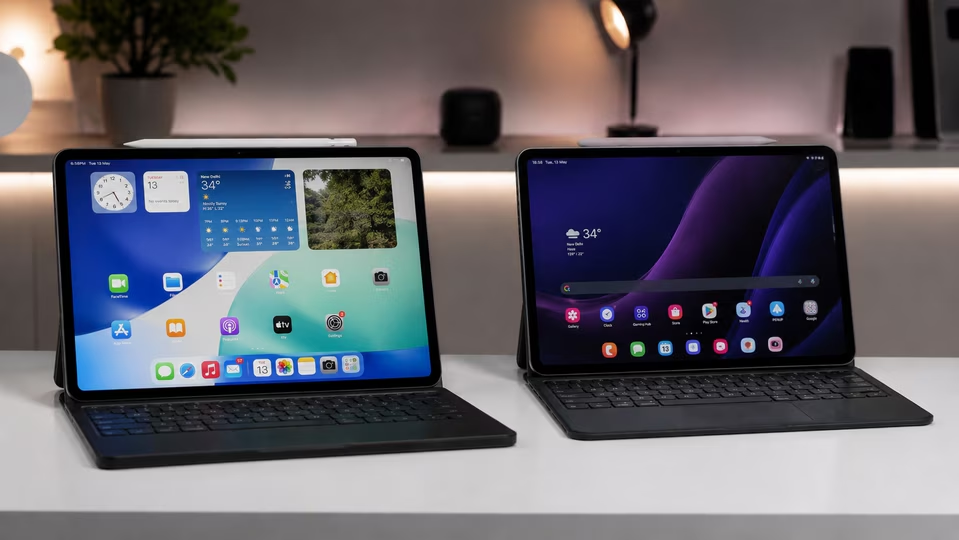
As iPadOS 27 narrows the multitasking gap between iPads and Android tablets, the rivalry between the two is shifting, with consumers increasingly focusing on ecosystems, pricing, and use cases.
The debate between iPads and Android tablets never ceases, as users champion their preferred platforms based on specific use cases and features. Multitasking capabilities, battery life, screen size, and ecosystems are all common points of contention.
However, this comparison focuses not on every feature these platforms offer, but rather on your actual needs regarding a tablet.
With that in mind, this article compares and analyzes some of the most common arguments surrounding Android tablets and iPads—and, more importantly, determines which platform is the better fit based on how you plan to use the device.
iPad vs Android tablet quick comparison
| Feature | iPad | Android tablet |
|---|---|---|
| Multitasking | Much better with iPadOS 27 | Flexible window management |
| Display choices | Good range, including large models | More variety, especially at lower prices |
| Ecosystem | Strong with iPhone and Mac | Stronger across different brands and devices |
| Accessories | Good, but compatibility needs checking | Generally wider third party compatibility |
| Battery life | Strong on modern models | Strong on modern models |
| Price range | More limited | Wider range of options |
| Best suited for | Apple users and ecosystem focused setups | Larger displays, flexibility and value |
Multitasking is no longer a reason to skip the iPad
For years, multitasking was one of the biggest arguments in favour of Android tablets. Android tablets generally offered more flexibility for running multiple apps side by side, resizing windows, and using the larger display like a desktop.
But with the release of iPadOS 27, that argument has become much weaker.
Apple has introduced more flexible window management in iPadOS 27, allowing users to resize app windows and arrange them on the screen. This means the iPad can now offer a much more desktop-like multitasking experience instead of forcing users into a more restricted layout.
More importantly, this is not limited to the latest iPads with Apple silicon. The feature is also available on supported older models, including the iPad 10th generation. This means even users with iPads powered by Apple’s A-series chips can take advantage of the newer multitasking experience.
So, if multitasking was the main reason you were considering an Android tablet, it is worth reconsidering that decision. The iPad has finally caught up in this area, at least for the kind of everyday multitasking most tablet users need.